RESEARCH OVERVIEW
What is Ipamorelin?
Ipamorelin is a synthetic pentapeptide investigated as a growth-hormone secretagogue. Its research literature spans receptor pharmacology, endocrine responses, metabolism and analytical detection. This makes it relevant to questions about peptide–receptor interactions and experimental hormone signalling, rather than a general claim about muscle gain or recovery.
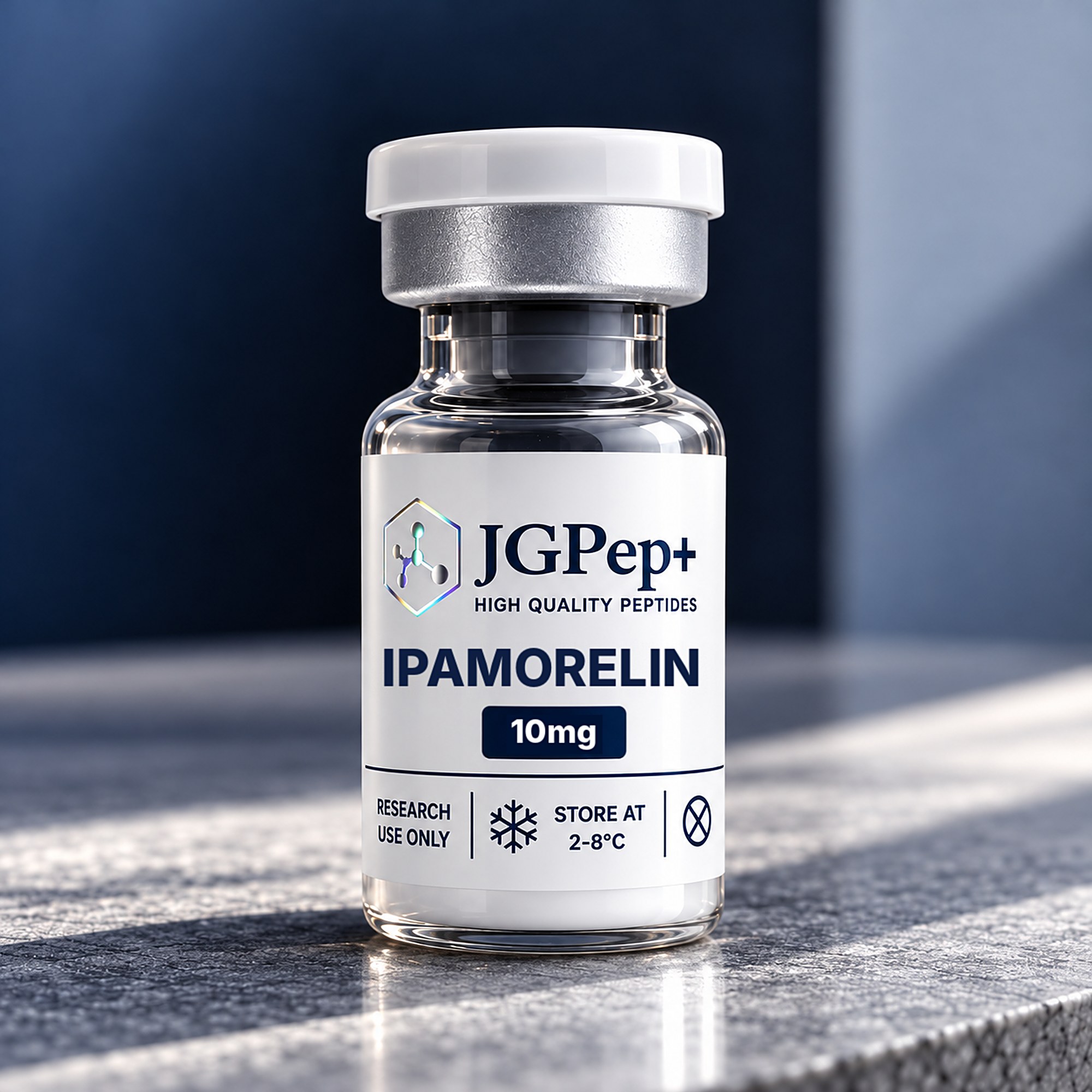
Ipamorelin 10 mg — product details
This listing is for Ipamorelin 10 mg, product code JG-MIG-029. The 10 mg figure is the listed material quantity, not a recommended dose or a concentration. Review this strength’s label and matching batch record when planning a laboratory assay.
LISTED CONTENT
10 mg
PRODUCT CODE
JG-MIG-029
INTENDED USE
Laboratory research
Research focus and areas of interest
Receptor pharmacology
Early work compared ipamorelin with other secretagogues in cell and animal systems. The experiments measured hormone-release responses and pharmacological selectivity under specified conditions. Selectivity in an assay should not be restated as absence of adverse effects in all settings. [1]
Endocrine and growth models
A rat study measured longitudinal bone growth and other physiological endpoints. A separate human-volunteer study modelled ipamorelin concentration and growth-hormone response over time. These models address different questions and neither validates a consumer performance claim. [2]
Metabolism and structure–activity
Analytical research investigated peptide metabolites and receptor activity across related secretagogues. Sequence changes and degradation can affect detectability and biological responses, so assay results depend on the exact peptide and experimental preparation. [3]
Evidence and limitations
The five papers include original animal, human pharmacology and analytical work. They do not establish a general indication, a personal-use protocol or equivalence between a research vial and a clinical preparation. Findings for related GHRPs are identified as comparative context.
Scientific references describe the material and methods used by their authors. They do not certify this product’s purity, sterility, identity or suitability for a particular experiment. A related analogue, delivery system or combination is not automatically equivalent to the supplied peptide.
Technical identity and documentation
Literature identity: a modified synthetic pentapeptide, including non-standard amino-acid residues and a terminal amide in the original description. Confirm these structural features and the supplied counterion in the batch documentation.
For this product’s identity and batch results, visit the COA and documentation page or contact JGPEP+ with the product and batch numbers. Literature values should not replace a matching analytical certificate.
Storage and laboratory handling
Follow the product label and batch-specific supplier instructions. Confirm temperature, solvent compatibility, stability and any reconstitution requirements before use. Storage conditions reported for another supplier or a clinical formulation should not be applied automatically to this material.
Research references
Original studies and analytical papers are linked below. Study type is included so that laboratory models, clinical research and related-analogue evidence can be distinguished.
1. Initial ipamorelin pharmacology. Raun K et al. 1998 Nov. European journal of endocrinology. Cell and animal study. PubMed PMID 9849822 · Publisher / DOI
2. Longitudinal-growth measurements in rats. Johansen PB et al. 1999 Apr. Growth hormone & IGF research : official journal of the Growth Hormone Research Society and the International IGF Research Society. Animal study. PubMed PMID 10373343 · Publisher / DOI
3. Metabolites of peptide secretagogues. Thomas A et al. 2012 Dec 4. Analytical chemistry. Analytical metabolism study. PubMed PMID 23101768 · Publisher / DOI
4. Human pharmacokinetic–pharmacodynamic modelling. Gobburu JV et al. 1999 Sep. Pharmaceutical research. Human pharmacology study. PubMed PMID 10496658 · Publisher / DOI
5. Comparative secretagogue structure–activity research. Ferro P et al. 2017 Jan. Drug testing and analysis. Comparative receptor and analytical study. PubMed PMID 26811125 · Publisher / DOI
For laboratory research only. Not for human or veterinary consumption or administration. This information is scientific background, not medical advice or an administration guide.

Reviews
There are no reviews yet.